


What’s it all about?
Through play I can help a dog learn to sit & stay, drop, retreive, recall, engage, focus and ignore distraction. Did you know you could be making more of the games you play? Starting with your new puppy, set up play sessions in the house & garden first, then on walks once these can take place. You’ll be putting patterns of behaviour into your dog’s routines which mean he will want to interact with you, rather than you struggling to get him to respond. With these invaluable life lessons, your time spent together will be fun for everyone.
Even if you have an adult dogs, it’s vital that you still play games. Games can help remind them that the cues and signals you taught them long ago, are still worth while responding to. For example, let’s say you’re using a recall sound or whistle regularly on walks to call your dog back to you or to reattach the leash. Many people recall their dogs away from distraction. If this is the only time your dog hears the recall sound, over time its power will become diluted. It’s likely the dog will become slower to respond or worse, he will stop responding altogether. I regularly play recall games with my dogs to reinorce that the recall whistle signals the start of the fun, not the end of it.
Foundation for Play
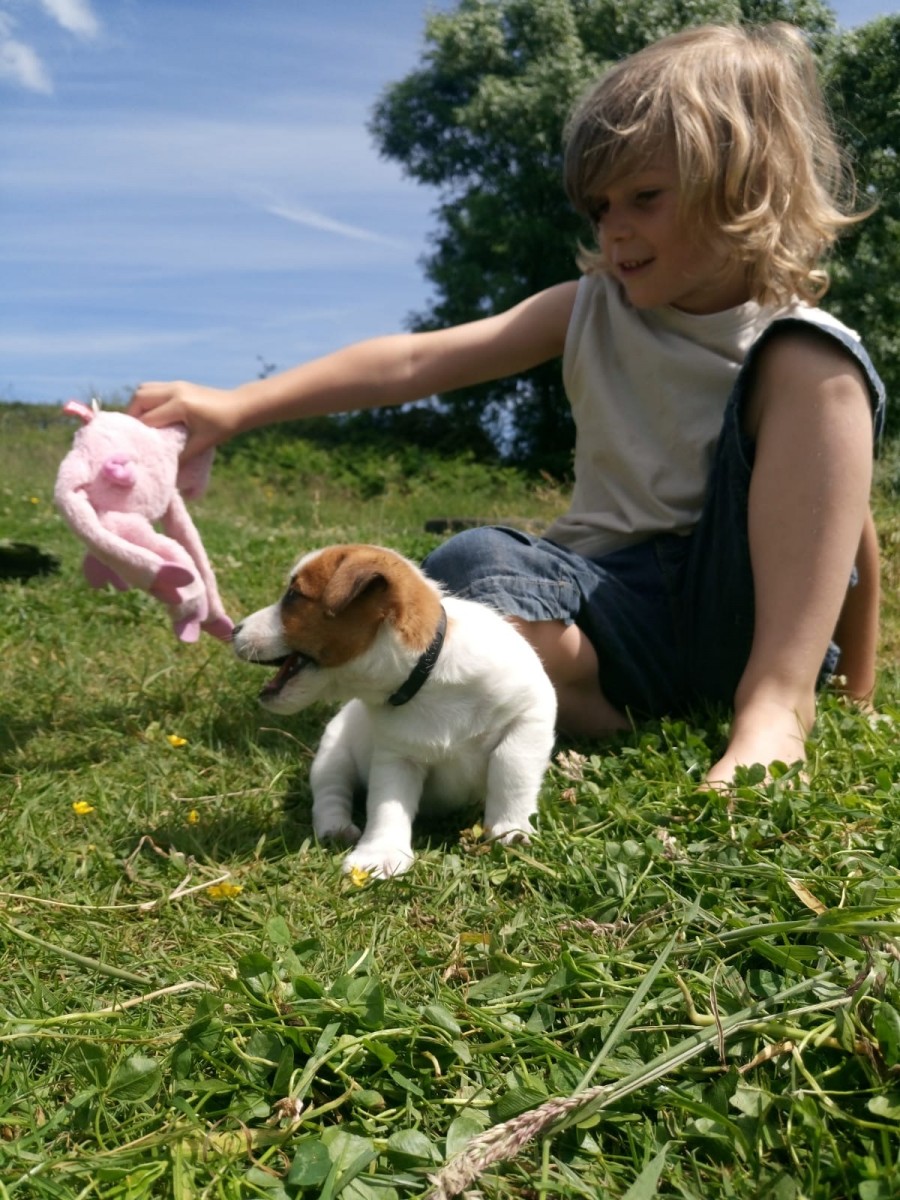
Here’s a tip! Until I have taught some rules of play which include sharing and swapping, I don’t tend to use balls. It’s too easy for puppy to run off and end the game by keeping the ball to himself. Instead I choose large or long toys which can be grabbed by you, for a game of tug to restart, even when puppy is trying to move away with the toy. One more tip! Play with a variety of items, not just the dog’s toys. Generalise the learning to mean it’s worth dropping, swapping and retrieving a multitude of household items.
Let’s start with tug and drop! In this first video you’ll note that it takes my foster puppy a while to join in the game of tug with me. This is perfectly normal for a young puppy. Watch how I allow him to win the toy-no one wants to play with someone who always wins so it’s important to build trust and balance in the game from the get go. I encourage him to move towards me to restart the game. Note that I’m kneeling down to help reassure the puppy that I’m not looming over him.
You’ll see above that play turns into biting because of frustration at being held back by me-my mistake! To avoid puppy getting too wound up during play, I suggest you end the game frequently with some calm time to practice your sit or down position. Simply swap the toy for food by offering your pup a tasty piece of real food (hotdog, chicken, sausage or cheese) from a flat hand. This will become your interim signal to drop as you’ll see explained further in the second tug video below.
As you can see from the video above, once you’ve worked through this routine of saying the verbal ‘drop’ cue (mine is ‘thank you’), followed by offering food and puppy spitting out the toy, you’ve now taught the foundations for ‘drop’. This is done without puppy even realising training is taking place! When he hears his drop cue, followed by the hand with food offerred, he should spit the toy out for the food. Once puppy is fluent with this routine, try giving the verbal drop cue, followed by a flat hand with no food and when he spits out the toy, resume the game as his reward. Now alternate between food reward and toy reward and you’ll have a trained ‘drop’ in no time. Your next task is to practice the same routine when puppy has a slipper, letter or other stolen item. Keep your tone happy and encouraging! Play the same ‘drop’ game and swap the illegal object for a tasty treat without confrontation or hassle.
It’s also helpful to train drop without food. My preference with pet dogs is always to use the method above. However, occasionally with a young dog in training, you might need a plan B if you run out of food, or your dog loves tug so much that food isn’t an incentive to drop. This was the case with the German Shepherd foster pup in the video above. I also find this method results in a better retrieve to hand, rather than the dog spitting the toy to the floor.
A few points to note. I gather up the toy and hold it gently and still to end the game. Once I end the game, no further pressure is put on the toy. It’s a subtle diffence, but a vital one that you’re trying to get puppy to drop the toy, you’re not trying to take the toy from the puppy. With my other hand, I take hold of puppy’s collar beneath his chin to stop him continuing the game by tugging backwards. Then I wait for puppy to get bored and release the toy at which point the game immediately begins again. The faster he drops, the faster we play again.
Teaching retreive reduces the risk of resource guarding. Quite simply put, your dog cannot guard something and bring it to you at the same time. Building trust is crucial. That’s why in all my play videos you’ll see me stroke, praise and encourage the dog when they approach me with something. Beware not to always take the item from them. The two toy game is great fun and encourages the dog not only to move towards you with the toy, it also encourages them to drop the toy, in order for the game to continue.
Training Through Play
As you and your dog gain confidence in your games, you can start to add control and use the play to incorporate and improve formal training such as sit or down, recall, drop & retrieve. Below you’ll see a training-through-play session with a 10 week old puppy who has no idea that he’s being trained. It’s all fun, we vary the learning often and we swap between high and calm to ensure puppy doesn’t become over stimulated or bored.
Watch also as puppy learns to ignore distraction and play with me instead. The distraction can come from the environment (dogs barking) but also note how the food can be a distraction. Whiskey doesn’t want to resume the tug, once he knows I have food. It’s a critical life skill to teach your dog to respond to you even when he’s distracted. This is a great early lesson in this concept. Watch how I work though this step as a means of letting puppy know that regardless of the distraction, he needs to join in the game at hand in order to get his reward.
You’ll see me training puppy positions of sit & down, reminding puppy of the value in these position as well as reminding him of the ‘break’ signal. I start to encourage retreive by letting go mid-tug and moving backwards to encourage puppy to bring the toy towards me. Watch me incorporate recall games into the session, letting puppy hear his recall sound as he’s running to me with enthusiasm. You’ll also see me encourage ‘drop’ using the tecniques outlined above. I think you’ll agree that his tail never stops wagging throughout.
Next here’s Whiskey, the Vizsla, at 12 weeks learning to sit until he’s told he can restart the game. I’m using my marker word ‘yes’ to signal the tug can start again. However I could add a more formal verbal signal such as ‘get it’ to let the dog know he can claim his prize. Now imagine you’re out and about with your dog and he sees another dog playing. A common occurrance is a dog steals the other dog’s ball. You’re trying here to lay foundations that unless he’s told he can interact with a toy, your dog shouldn’t assume it’s his for the taking.
Watch the video below with added traffic and other dogs. At this stage, it’s a good plan to add a long line to help keep the dog safe. After all unless you’re lucky enough to own your own land, life gets in the way sometimes and I don’t want my puppy checking out of our play session, wandering off or making up his own rules of engagement with other dogs. It’s crucial at this stage that I’m part of the fun, not a witness to it.
At a year old, most dogs will have heard commands such as sit, down, recall, drop, fetch thousands of times. All the early training, positive reinforcement and rewards you offerred them as puppies may be a long distant memory for your dog. This can mean they start to respond slower or worse still, ignore you. Often this is exacerbated by hormones & adolescence. If you remove rewards completely, you’re bound to see a drop off in your dog’s ability to listen and respond. Afterall, all learnt behaviours can be unlearnt if no reward is forthcoming. How long would you continue to go to work, if you stopped getting paid?
Regular play comes in handy. Revamp your training and your dog’s responses with fun games. Here’s Whiskey again, now 15 months old, having a fun packed and rewarding recall session. He’s also being reminded that he needs to do as I ask, even with distraction present. The tug toy is his favourite,, the ball, less so. Watch as he works out that only when he ignores the distracting tug toy and retrieves the ball as asked, does he get access to his prize.
Finally, you’ll see Whiskey again below, showing a perfected retrieve to hand & drop on cue. He’s demonstrating an understanding of impulse control by not grabbing the toy until he’s signaled to do so. He can hold his sit even with distraction-his favourite toy being moved around in front of him. How often have you thought ‘but he can do it at home. Why can’t my dog respond in the real world?’ The more you play, the more your dog will be reminded of their learnt skills and training and the more you can use these skills in real life situations. Afterall, that’s what good training is all about.
The purpose of this page is to help you enjoy your time together by training through play. If you’ve worked through this lesson, you and your dog should have learnt the foundations for tug, retreive and drop, all helpful life skills to prevent the development of resource guarding resulting in an easier dog to live with.
Training through play with your puppy, and throughout your dog’s life will help to remind them that being pushy never gets results, being calm is rewarded. Play can inhance and improve your recall training. Through games, you can teach your dog to focus and listen when distracted. If you want a dog who listens, responds and thinks you’re the best fun to be with, regardless of what’s going on, all this can be achieve through play. Now go have fun with your dog!