
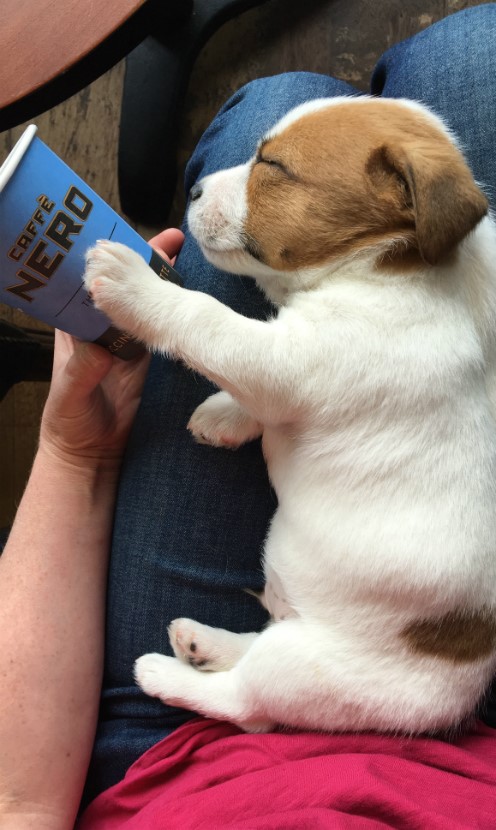
Jack Russell Terrier, Jellybean at 8 weeks, out for coffee

What’s it all About?
When people talk about socialisation, they are really talking about habituation as well. Socialisation refers to your dog’s responses to people and other animals. Habituations refers to his reaction to the environment around him, urban or rural, transport, sounds and smells, obvious, sudden or unexpected.
Well balanced dogs respond to situations they encounter in a well balanced way. Clients often tell me ‘we sent him to day-care so that he could become socialised’. This has resulted in their dog being so excited that he’s straining at the end of the leash or worse, to interact with other dogs. Being obsessed with or over excited around anything does not equate to good social skills. In the same theme, if clients tell me ‘we’re walking him along the local roads so he gets used to traffic’ but the dog is fearful and getting worse, then without realising it, they are doing the opposite to what they are intending to do.
If done well, socialisation and habituation results in an indifferent dog. One who reacts in a measured way to his environment and those within it. The best example of a well socialised dogs is a guide dog.

Getting it Right!
Your puppy’s ideal stage for social & environmental learning is between 3-14 weeks of age. This means that your breeder should be doing most of the work where early learning is concerned. It’s vital to support breeders who know about the importance of early learning & who are actively applying this knowledge to their litters.
Once you bring puppy home, your job begins. Getting it right means you should focus on 3 things. The first is quality over quantity. It’s not the number of encounters your dog has during this period, it’s the quality of interaction and experience that matters. Next ask yourself is my puppy enjoying themselves and is my is puppy learning things that will be of benefit to him later in life?
Let’s take some examples to demonstrate these important questions. Your outgoing, confident puppy may be having great fun interacting with children by jumping all over them. The kids may also be having fun but puppy isn’t learning good social skills for later life. Your noise sensitive puppy may be walking nicely by your side along a busy road but not enjoying one moment of it, as the traffic is just too intense. You may think you’re helping your shy puppy get used to people by allowing random folk to crowd, interact with, or worse still pick puppy up. If this puppy isn’t having a nice time, you’re just setting him up to dislike people even more as he grows up.
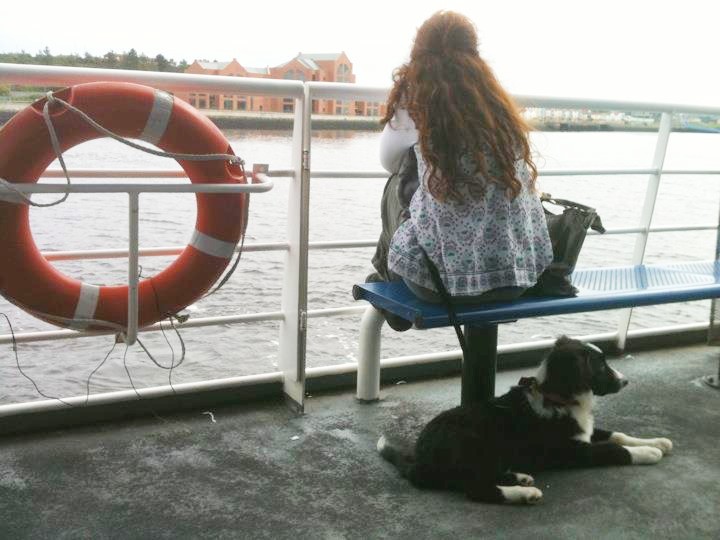
Border Collie, Guinness at 15 weeks on the ferry
Depending on whether you have an outgoing, confident puppy, or a more reserved, shy puppy, socialisation and habituation need to be done carefully and with consideration. It shouldn’t be a chaotic, free for all nor in any way overwhelming for your dog. Ask yourself ‘is my dog having a good time? Will what they’re learning get them into trouble later in life?’
Click on the videos below showing foster puppy Fraggle having some new experiences with kids, rabbits, guinea pigs and a cat. In the first video, she’s comfortable with the kids, who are calm and relaxed around her. This means we can tick both boxes. She is having a good time and she’s learning calm interaction with kids. She’s curious but wary of the guinea pigs & rabbits. However because she’s not overwhelmed and she can move away at any point, the exposure can continue and in time, her confidence will grow.
At no point would I advise that a dog is forced to interact with another creature by presenting that creature to the dog. Sadly this is something which people commonly do. In the second video, she’s not practicing any risky behaviour with the kids on the trampoline, so I’m happy to let continue. You’ll notice she’s steering well clear of the ginger tabby cat who told her off for being too forward. She’s learning respectful, sensible social skills around other animals.
For over-friendly confident puppies, you need to put control into dog and human greetings (leash or baby gate) and make sure puppy is learning calm interaction. For shy or reserved puppies, they must be allowed to get used to things in their own time, not have interaction forced upon them. For all dogs, if they look overexcited or overwhelmed, give more space from the person or thing that’s causing the reaction.
Your dog will learn far more from dog savvy adult dogs (ages 3+) than they will from other puppies or adolescents. Avoid play dates. They encourage crazy, rough play that is likely to get your dog into trouble at a later stage. Avoid Day Care facilities. They were designed for kids not dogs and I make a living from dogs who are ruined by doggy day care experiences. Pick and choose your dog’s friends carefully and ask the two important questions again.
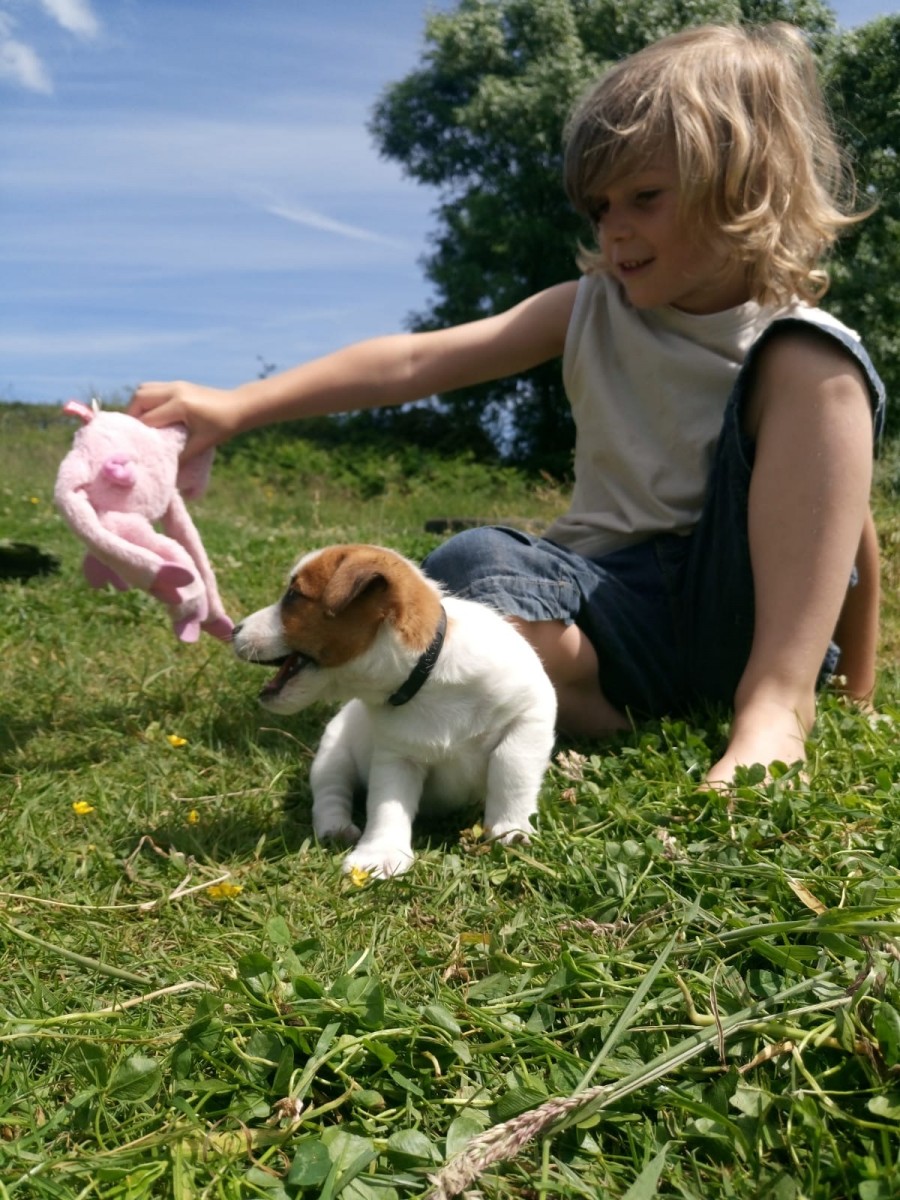
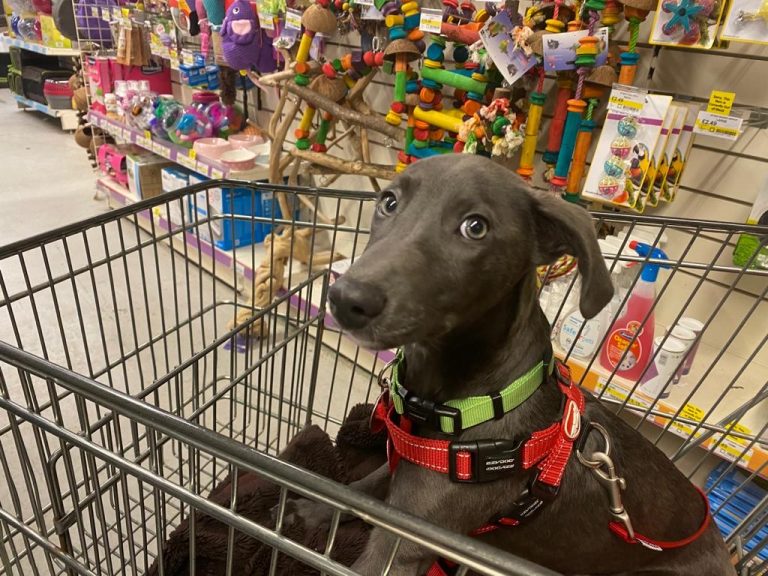
12 week old Lurcher, Lucca browsing the toy aisle at his local pet shop
Socialisation Ideas
Plan your dog’s early experiences carefully. If you want your dog to calm and relaxed around adults, kids and other dogs, their early social experiences need to encourage calm, relaxed interaction in these social situations. If you need your dog to cope with busy environments, gradual exposure needs to start now. If you want your dog to be safe around livestock or horses, rabbits or cats, controlled exposure as early as possible should be your goal.
There are plenty of ideas outlined below. At the very least, visiting friends and family, with well adjusted, puppy friendly, vaccinated adult dogs is a great starting point. You can do this before vaccinations are complete too.
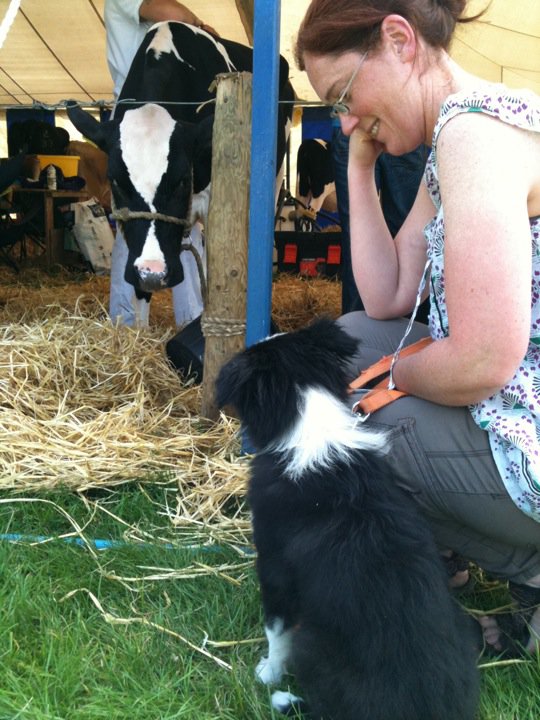
Guinnes meets cows at 12 weeks
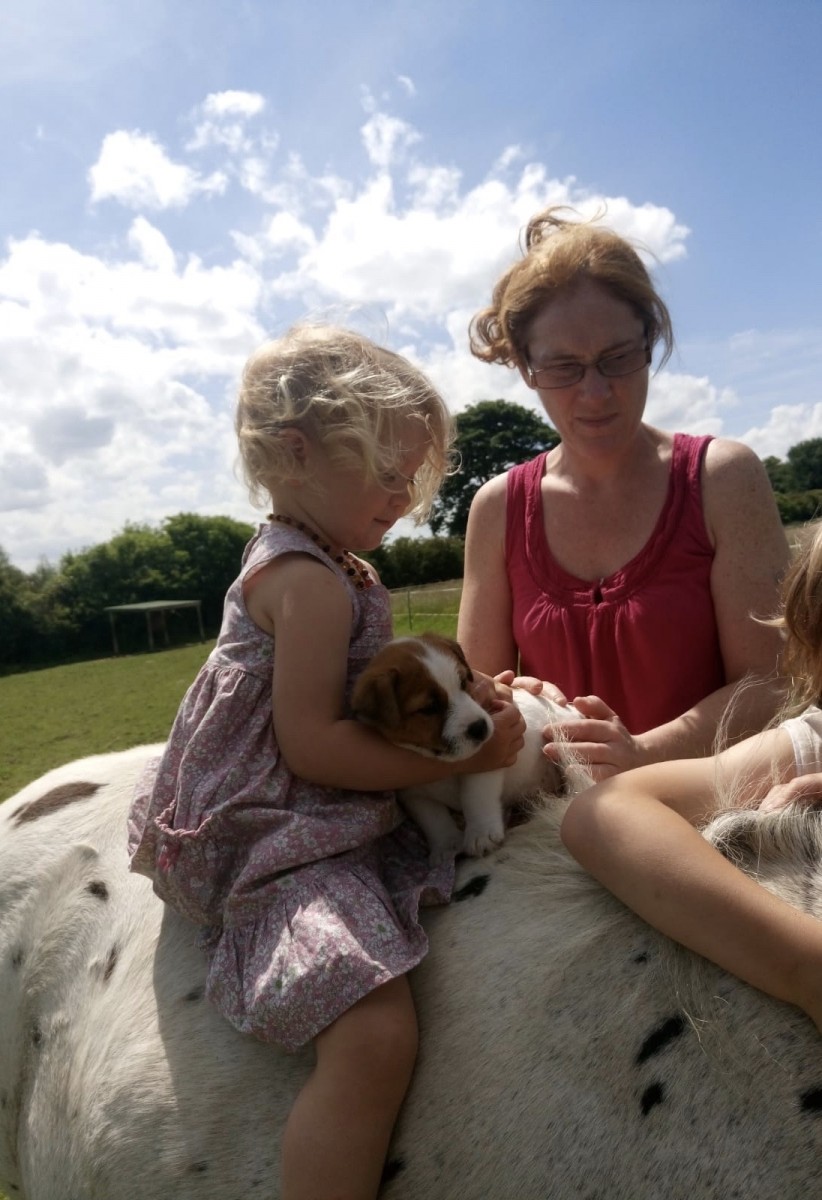
Jellybean’s first time on a horse
Because you’re on a limited timescale for optimum socialisation & habituation, exposing your puppy to new people and places needs to start before your vaccination programme is complete. With careful consideration, it’s possible to have lots of low risk experiences & trips out with your puppy in the first few weeks.
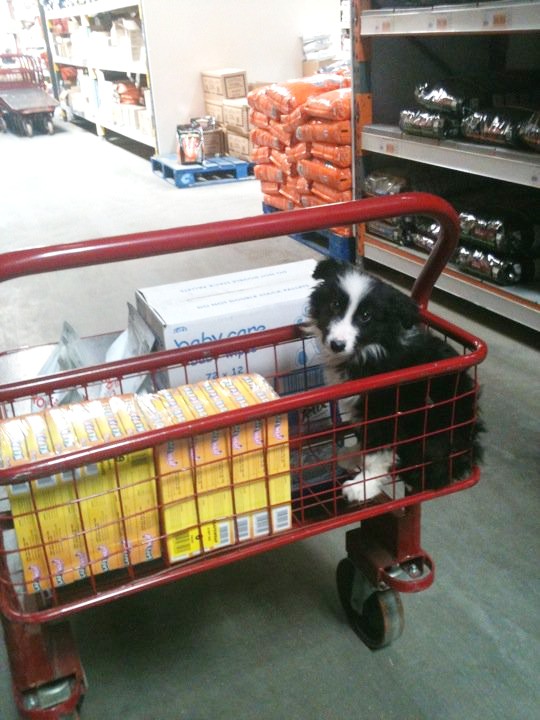
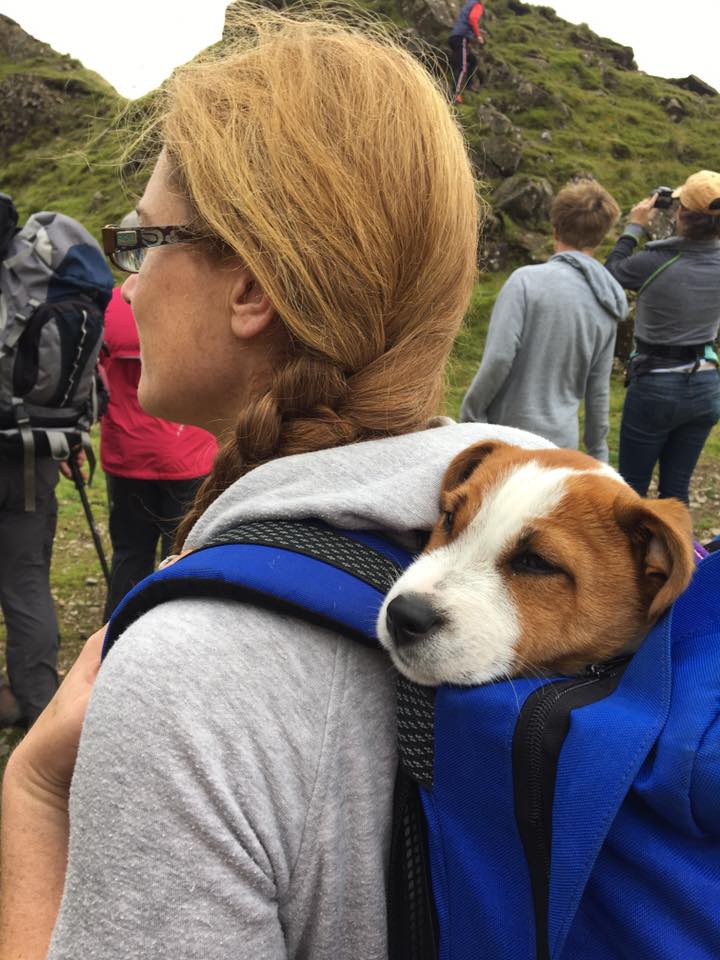
Find several local pet friendly shops (pet shops and outdoor gear shops are often dog friendly). Bring a blanket from home and pop puppy on it in the shopping trolley. Be careful to supervise him so he can’t jump out. Browse the aisles while puppy watches from the safety of the trolley. Buy a puppy carrier. You’ll get so much use out of it during the first month, it’s worth the investment. The photo of the left shows 11 week old Jellybean on a guided nature hike in the mountains.
While carrying puppy, walk along your local high street. Sit on a park bench while puppy watches the world go by. Take short bus or train journeys. Visit your local coffee shop for a take-away coffee, or sit in for a quick bite with puppy on your knee. All these early exposures to life will help your puppy adapt once he can join in fully, post vaccinations when he no longer needs to be carried. In the video below you’ll see my dog Jellybean, aged 8 weeks asleep on my knee at Central Station.
I rarely go anywhere with a young puppy without a stuffed Kong or alternative food dispensing toy. Chewing is a great relaxation aid and while puppy enjoys a tasty snack, they can also get used to the world going on around them.
Here is foster puppy Fraggle at 14 weeks enjoying a stuffed Kong toy while we eat lunch outdoors in a town market square. During this time, plenty of folk approached us to ‘say hi’ to the cute puppy. Here’s a tip. Unless you want to end up with a dog who mugs unfamiliar people for kicks in a year’s time, socialisation should not involve contact with every random person who approaches you out and about.
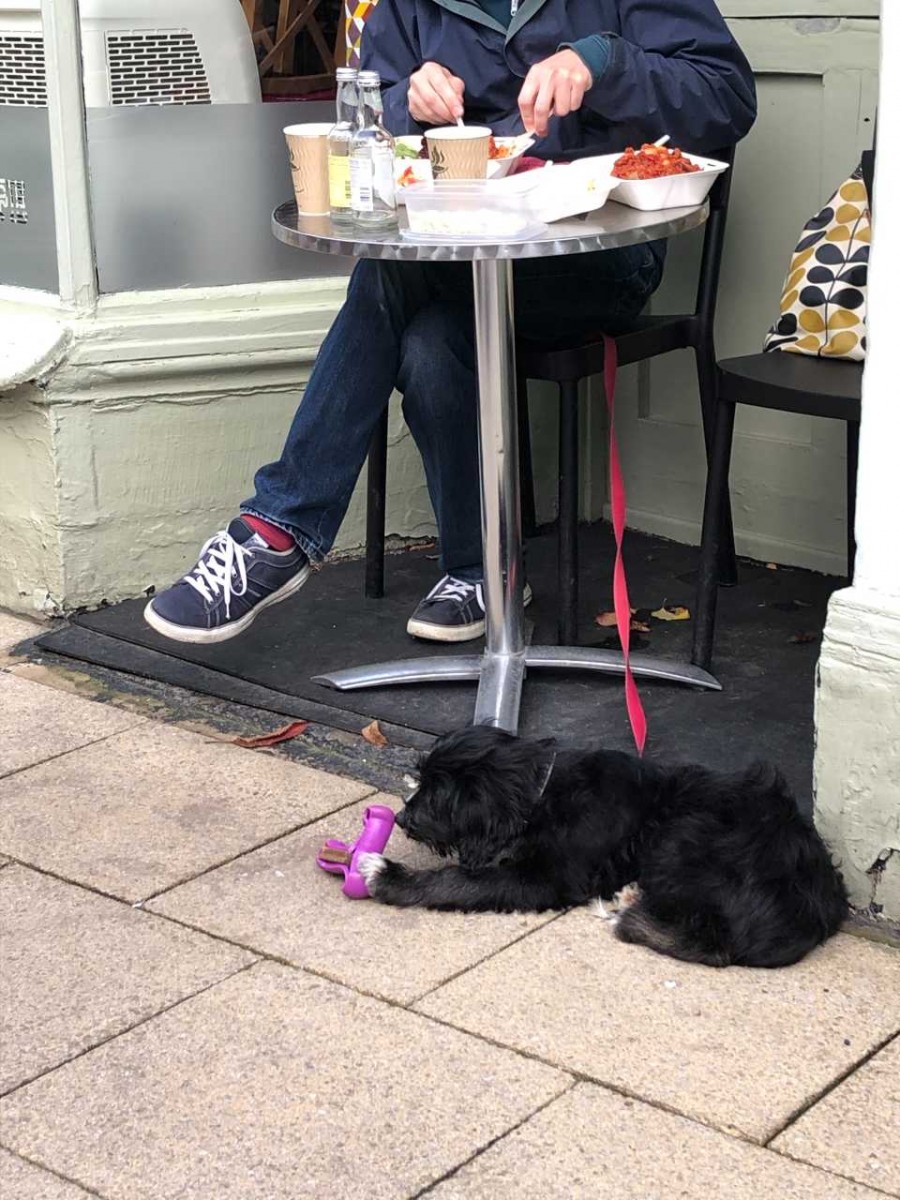
If you want a dog you can bring anywhere but who doesn’t bother people or other dogs when out and about, here’s a great learning experience to include in your socialisation programme. With a tasty stuffed Kong or suitable chew to keep puppy busy, park somewhere quiet to start with, then increasingly busy, as puppy gets the idea that things going on around him have nothing to do with him and are of no interest.
A few last things to be aware of when raising a sociable dog who fits in everywhere. Never allow strangers to stroke your puppy while you’re carrying them. This removes puppy’s ability to back away if they’re not comfortable with the encounter. Similarly, be careful thinking dogs who are overly excited on greeting feel positive about that encounter. Many dogs escalate excitement when they’re overwhelmed, rather than backing away from the thing they are wary of.
Finally, if you have an adolescent dog (16 weeks-24months) and you’d like to know more about how best to socialise them with dogs at this often challenging age, this blog will help greatly.