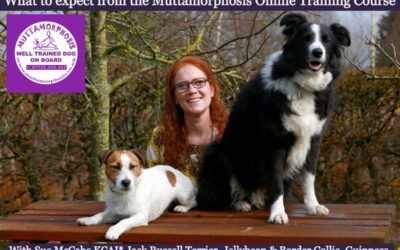
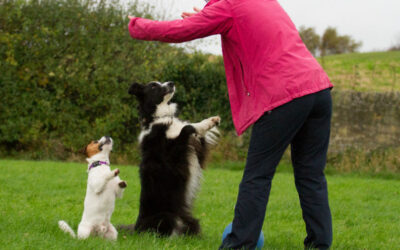
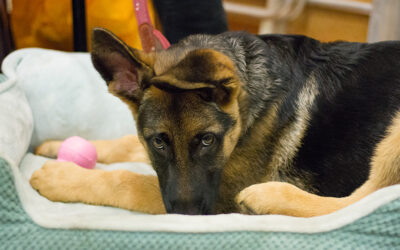
During his second week home, I started basic sit and down positions with Jellybean using a clicker and tasty food. Over the past week, I’ve gradually withdrawn the lure (food in my hand) and changed to a hand signal. I’ve also introduced the concept of ‘selling the position’ as worthwhile (foundation for stay training), by offering high levels of feedback for holding position, then gradually reducing the feedback over time. For the first time, because I like to try new ideas, instead of the click meaning ‘you’re done’ as I have always taught in the past, my click (or clicker word ‘ok’) now means keep going! I’ve taught Jellybean from the outset, the ‘break’ signal says ‘you’re finished’.
The sit and down positions are invaluable for my dog’s entire lives. I personally prefer the ‘down’ position as it’s more settled and more comfy for the dog to hold longer. I will have to focus on ‘stand’ also. Being mindful of the fact this is my first pedigree dog, I may dip my toes into the show world with him. But for now, it’s never too early to start sit and down. Though not in the video, to avoid it being even longer than it is, after approx. 5 reps, we always have a game of tug. Play, train, play, train means the dog is keen to work, focused on the task at hand and anticipating the fun game to come, which helps a lot when we start to phase out the food reward more over the coming weeks.
A common question is “when do I start to say ‘Sit’ and ‘Down’? I’m never in a rush to add verbal cues for several reasons. The first is that dogs are more swayed towards visual learning. Rather than listening to what we’re saying, they mostly watch what we’re doing. So to avoid wasting my breath, I’d rather they were very clear on what I wanted them to do using a hand signal, before I start to change to a verbal cue (it’s very easy to change, more on this in a later video). The second reason is it’s very easy to start repeating verbal cues, teaching the dog that they only need to respond when I’ve said sit multiple times. A bad habit to start. Finally, I’m at risk of teaching the dog sit doesn’t mean sit, if I start saying the word while the dog is still trying to work out what it is I want them to do. For example, if I’m saying the word ‘sit’ but puppy is pawing, bouncing or ignoring me, as seen several times in the video, then I risk teaching him that sit doesn’t mean sit at all.