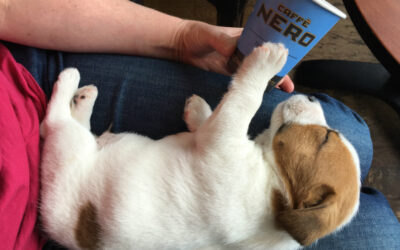
This blog is designed to help you prioritise what you need to focus on with your new puppy. What’s vital to get right from the outset and what can wait!
18months ago I found the most wonderful breeder and put my name down for a puppy. 14 months ago I flew to meet the family, the dam-to-be, the uncle, aunt and half-sister. 3 months ago we found out there were puppies on the way. 7 weeks ago two gorgeous boys were born. One week ago Jellybean finally came home and so far at least, he’s the perfect puppy.
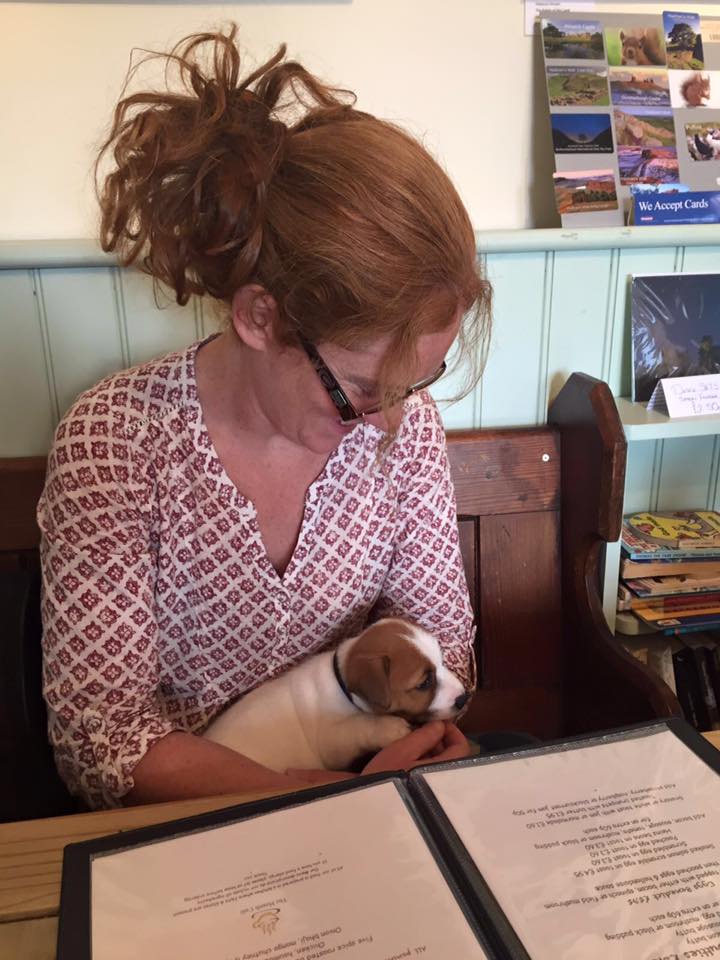
After bringing your puppy home, the first week is about getting to know each other, bonding and settling in. Any consideration for training should be more about life skills and less about sit & stay. Important early lessons can really pave the way for great future training and help make things like recall, self control and house training much easier in the long term.
Here’s what I’ve learnt about Jellybean in the past week:
- Licking my face (cute) turns to biting my face (ouch!) very quickly. Fact: If your puppy can’t reach your face, the biting won’t continue.
- He can and will pee EVERY SINGLE TIME I bring him out, sometimes as often as every 20mins. This is especially the case after he wakes up, when ‘cluster wees’ happen, so we take a few trips outside after he wakes up. Fact: house training starts on day 1 and always takes longer than you think it will. It shouldn’t involve puppy-pads and is simple to get right, from the start.
- For Jellybean, daylight at 6am means play time. Fact: This phase will end, especially with the night time toilet trip routine I recommend.
- Long grass is no challenge for stumpy legs. Fact: it’s important not to over exercise your puppy.
- Food is good but tug is better. Fact: If you play lots it will help with bonding and to lay down good skills for future training.
- Nothing phases Jellybean (train station, cats, kids, van travel, fireworks or even toy robots (yes, robots!). Fact: if you want a confident well adjusted puppy, research a breeder who only breeds from parent dogs of outgoing, steady temperament & who socialises the litter lots in the first 8 weeks.
- 30mins of being awake is usually followed by an hour or so of sleep. Fact: This is a good pattern to set, as we all need to get on with life, despite new puppy fun.
- He’s pretty good at entertaining himself. Fact: a puppy pen is the perfect safe place for this.
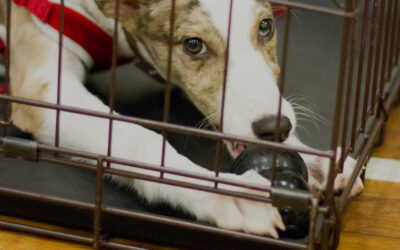
From the moment a puppy comes to live with me, every interaction we have says ‘I love that, do more of it’ (click/feed) or ‘I’m not so keen on that, do this instead (distraction and diversion, in Jelly’s case, grab and tug this fast moving object). My only reprimand takes the form of disengagement and walking away (so far only needed for biting). The need to correct is lessened to almost nil by the use of monitored and supervised fun interaction as many times a day as I have time for. I follow this with the use of an entertaining puppy pen or settle down crate, for times I need to get on with non-puppy related activities. This is a pattern I set from day 1. Construvtive and interactive up-time, then enforced, settle-down time in a pen or crate.
With all this in mind, here is what Jellybean has learnt during his first week at home:
- People of all ages are great fun and are likely to offer toys, food or cuddles. Fact: After the first few days to settle in at home, you can invite people to visit, and visit other people’s homes and gardens. Don’t force interaction with shy puppies and don’t allow outgoing puppies to learn bad greeting habits.
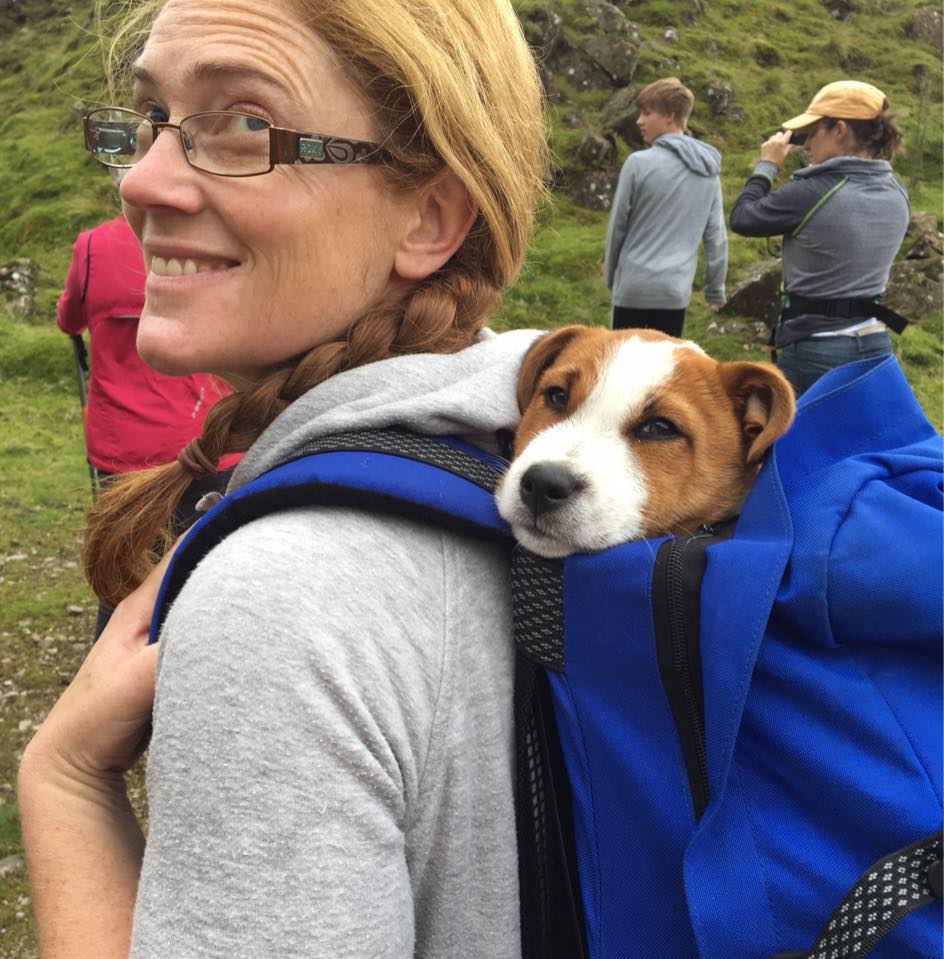
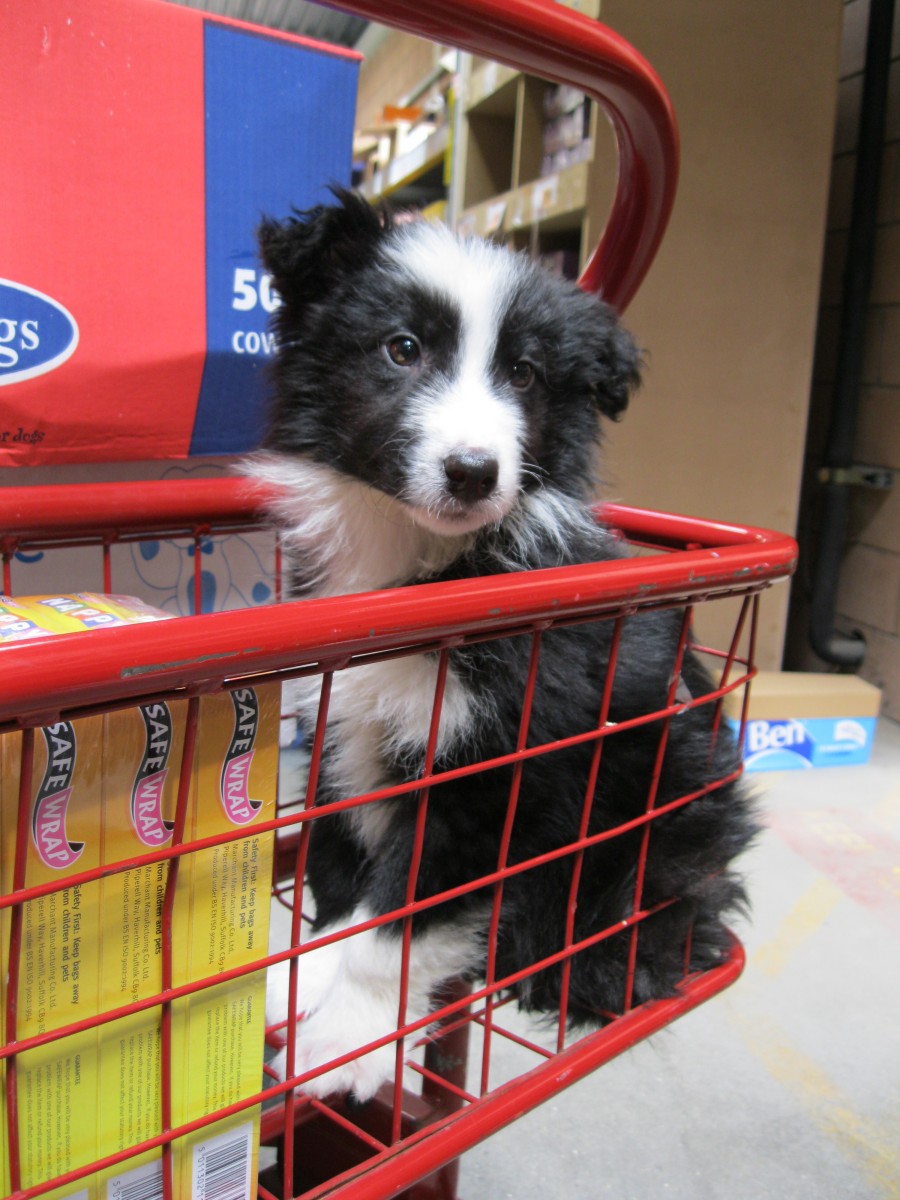
- Trips to the pet shop in the trolley are great fun. Fact; Getting your puppy out and about in either a carrier, trolley or in your arms is a safe way to allow them to experience the world before vaccinations are complete.
- Dogs are often around and mostly friendly, but they’re not very interesting. Fact: I recommend finding well adjusted adult dogs who are patient and used to puppies to teach good social skills.
- Biting or nipping means the human disengages and ignore me momentarily. Fact: Time out for about 30 seconds for biting works well, but the important thing is to find out why puppy is biting in the first instance.
- There are so many opportunities to pee outside, it will mean I never need to pee inside. Fact: House training is about setting a pattern of outdoor toileting, then gradually adding duration between trips outside so puppy learns to hold it.
- If I make noise overnight, my human makes me feel safe by stroking me until I settle.
- We go outside for pees overnight if the alarm clock wakes me. Fact: if your puppy learns to wake you, you can say goodbye to ever having a lie in at the weekends.
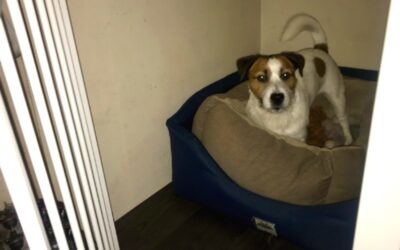
- When I’m tired, I’m lifted into my pen/crate for a sleep. My humans usually stay around. I see them, or if they wander off, I hear them. Occasionally, they leave me alone completely but only for a short while. Fact: Alone-time training starts on day 1 and is vital for good puppy mental health.
- I have to stay in my puppy pen and play/eat/snooze, while the house gets on with things around me, even if I occasionally vocalised in frustration. Fact: Puppies need to learn, in a sensitive and positive manner, that their human’s can’t always give them attention and time and that the doggy doorbell doesn’t work.
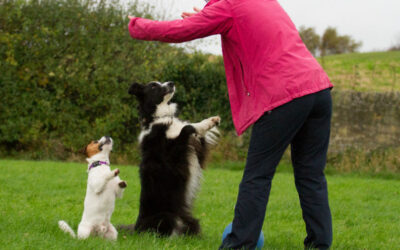
- Sit starts the game. Fact: all control for off leash freedom can be taught through play.
- Following my human, running to my human, playing with my human are great fun and always worth my while. Fact: Recall training is best started early. It’s fun and enjoyable for puppy and it’s super easy to imprint a recall sound which stays with them for their entire lives.
- After my mum’s voice, the clicker is the best sound I can ever hear. Fact: teaching a marker word or understanding of what the clicker means will make training and communication so much easier for puppy and human and can be done from the outset.
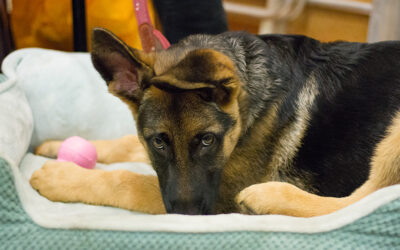
- Jumping onto my bed and waiting till I’m told to move, usually means I get food. Fact: Early positive association with a mat or bed is super handy for future control and so easy to train with tasty treats and a keen puppy.
Sits and stays are important. Loose leash is vital for enjoyable walks. Emergency downs and reliable recall are crucial for my dogs to enjoy life and be safe off lead. But this first week should be about laying foundations, getting to know my new puppy and giving him time to get to know me too. These early lessons in self-control, recall and of course socialisation (life is good) are so much more important to me than whether my pup is doing a 1 minute sit/stay by the age of 4 months. Formal training can wait. What can’t wait is the all-important bonding and learning that life is good! So that’s what I recommend focusing on. You can never have enough cuddles.
Want to get ahead with training? Join the Muttamorphosis Online Puppy Course with 6 jammed packed modules, covering all the foundations for puppy training using video tutorials and helpful lessons.