Already, the weeks will have flown by and you’ll notice a big change in your puppy’s development. They grow up so fast that it takes a lot of hard work to capture the first few important weeks of your relationship, and build on it to establish a great bond, a confident puppy and a set of safe rules of engagement when it comes to people and other dogs.
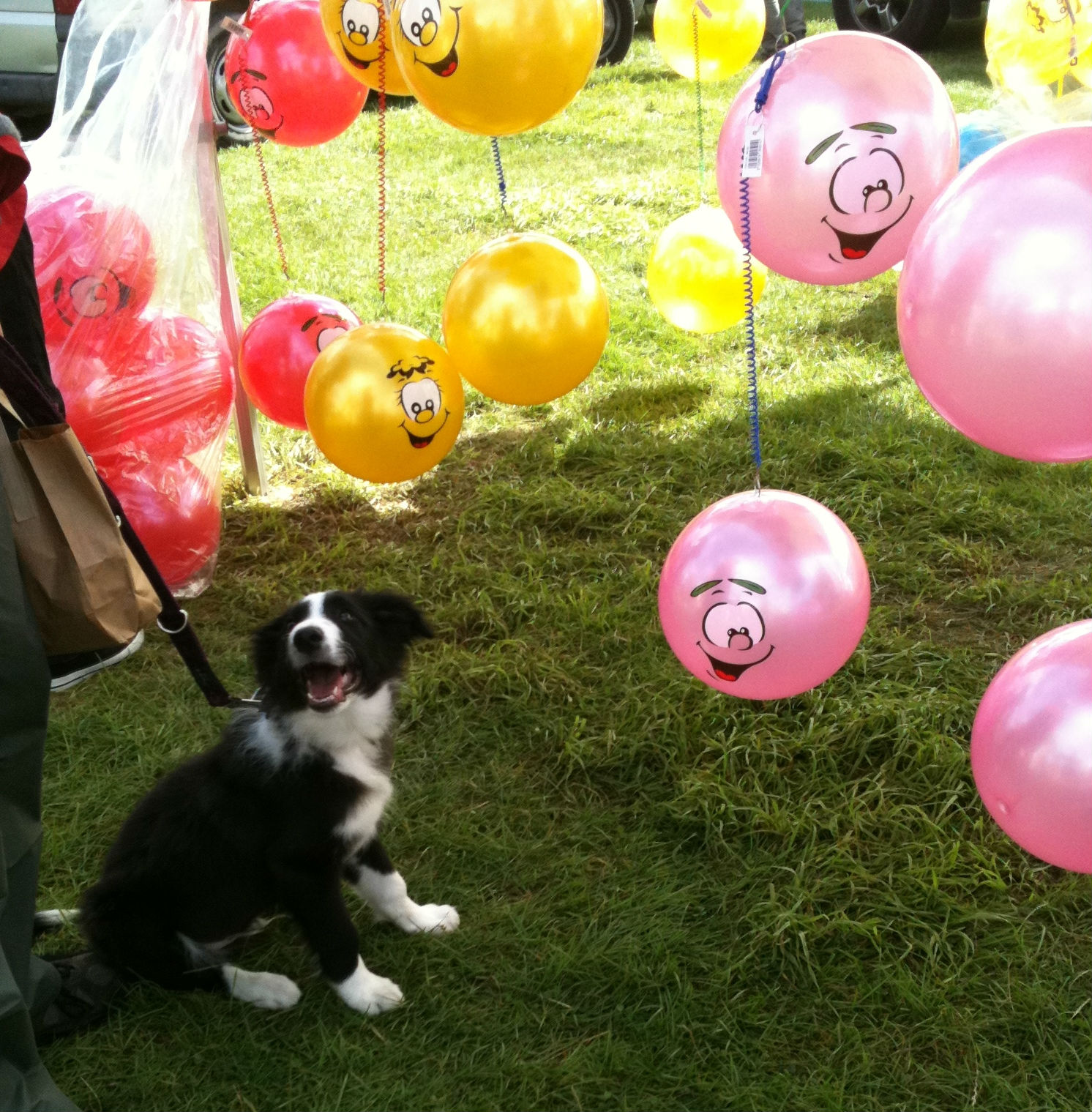
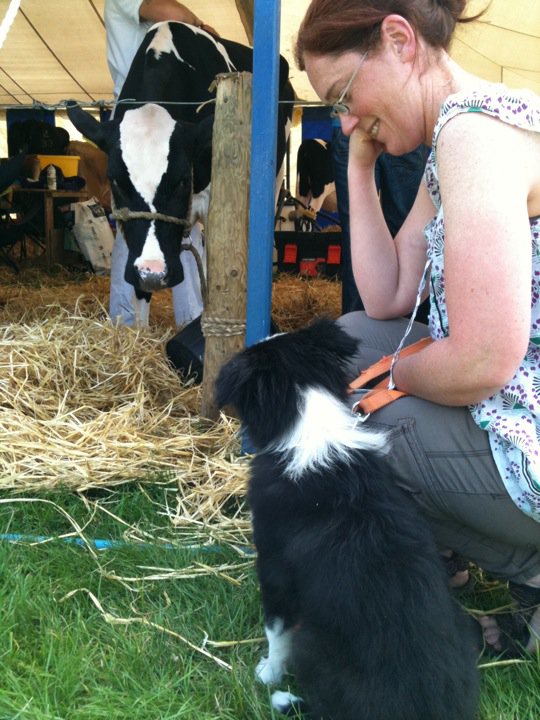
Collies are strange creatures. Those of you who know the breed, will agree. We spent a whole day at a country fair with 14 week old Guinness and he was Mr. Steady throughout the entire event. He met cows, sheep, horses, poultry, ferrets, ice cream vans, balloons and so many children and other dogs that we lost count. Then on the way back to the car, we were walking over a manhole cover and Guinness decided that this was worth having a minor scare about. He refused to walk across it and only quick-chicken-association worked to convince him otherwise. Tasty treats, it seems, will cancel most scary situations, at least when they are this young.
The work on early socialisation which began as soon as Guinness arrived home at 8 weeks, has continued during his first 8 weeks with us. Once his vaccination programme was complete, all the places we visited with him in our arms, were revisited with him by our side. Interesting obstacles were encountered and as with all things at this stage, take your time. Socialisation is about quality not quantity.
Our puppy had an issue with steps. He would sit at the top or bottom of the flight of stairs and refuse to move. We gave him as long as he needed and encouraged him with tasty treats. It’s taken 5 weeks to get him to willingly climb steps by himself and that’s ok! We have as long as it takes and this is something I tell myself every day as he gets older and bolder. Many clients get frustrated with their dog’s slow progress when it comes to socialisation and early training. I’ve heard so many times, ‘he just refuses to walk’ or ‘he won’t play outside’. Keep trying, be positive, be happy and encourage your puppy at every step. Remember how easily distracted they are and how new everything is to them. Allow puppy to progress at his own pace. If you want a dog you can simply clip a leash on and take for a stroll, then consider giving a rescue adult dog a home.
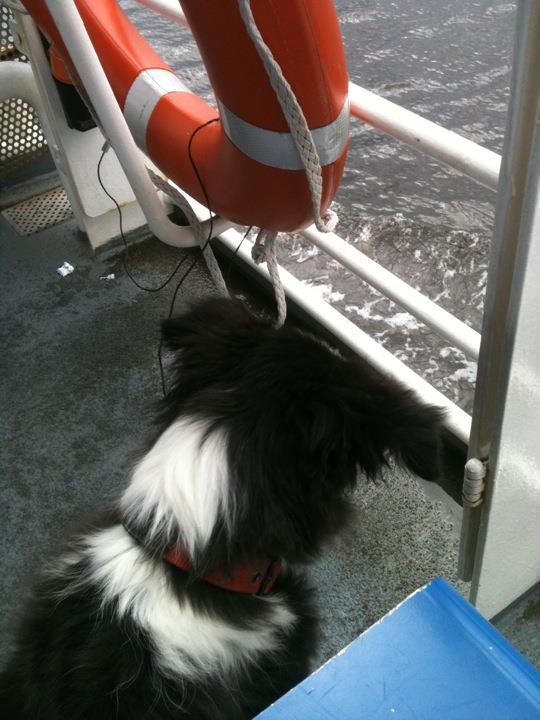
Here are some of the places Guinness has been during his first month at home. We’ve been camping! We’ve been to several country fairs and agricultural shows, where he met livestock, tractors and countless children and other dogs. I noticed during one trip along a busy high street that Guinness was pulling away each time a bus passed by. So for 6 days in a row we visited side roads and less busy places, various quieter high streets, until he was happy walking along without a worry, regardless of the engines passing at a distance. We will gradually get closer to the busy roads over the next couple of months.
Guinness has been to visit our local pet shop and vets multiple times, meeting and greeting staff. We have taken him to our local pub on numerous occasions and he’s been on both buses and trains. A garden centre which is dog friendly was a great place to experience smells and sounds of aquatics, small furries like rabbits and guinea pigs, kids playing and café hubbub.
As your puppy gets used to the new routine around your home, it’s important to establish rules early on, so that bad habits don’t get a chance to develop. Remember that things you find cute now, may not be acceptable when your puppy is fully grown. So don’t allow jumping up for cuddles or attention just because your puppy is cute and you’re so happy to see him. This translates into mugging people who visit your home, or jumping on the lady with the white trousers while out and about. People will be less than happy with your fully grown dog putting feet up to say ‘hi’. If you want a no furniture rule with your adult dog, don’t begin by allowing puppy on the sofa now. It’s really unfair to change the rules half way through the game and this applies to your puppy’s upbringing also.
In summary, here is the easiest way to show your puppy what you want from him around the house, garden and beyond; food lures and rewards. If puppy follows me around the garden and away from schrubs he may be interest in, I feed him. If he has something in his mouth, I walk away making silly noises so I’m hugely exciting, he drops the item and comes to investigate, I feed him. If puppy follows me in from the garden or out to my fan, I feed him. I toss food from puppies nose along the ground and across doorway thresholds. This can be easily converted into sweeping your hand forward to get puppy to move forward out of your way, or into a room so you can close the door on him. I teach puppy that if I drop him hand down flat towards his face, it’s highly likely I have food in it so it’s worth investigating. This is extremely useful skill and can get you out of all kinds of sticky situations.
Watch this! https://vimeo.com/507492497/23fb27c366
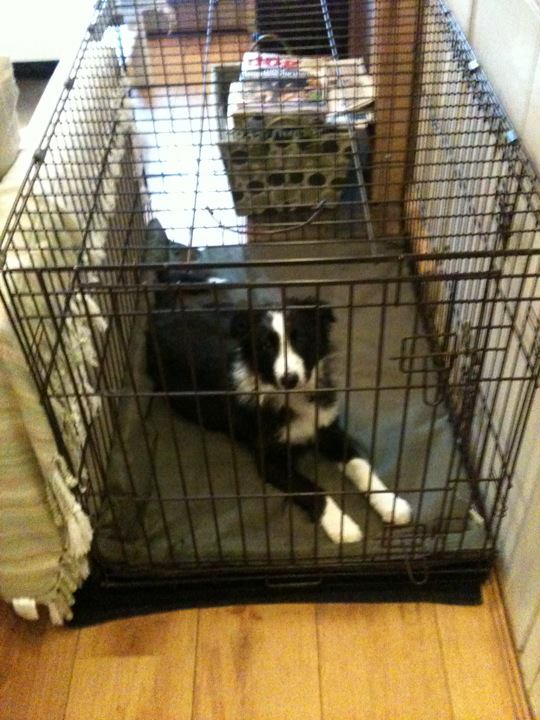
House training has progressed well with our little black and whThose early weeks of getting up to let him out over night have thankfully moved on. At first, Guinness was on a four hour schedule over night but gradually he seemed reluctant to get up and come out with me when I woke him, so I started to set the alarm clock later. Over approximately 2 weeks we pushed the duration he was left without being woken up, until at 10 weeks, he could hold it over night. Every dog is different and some won’t actually be able to hold it all night until around 13 weeks, so, as with a lot of other things, take your cues from your puppy. Keep a toileting and feeding diary as this is still beneficial as it gets you used to your puppy’s schedule and toileting habits.
During the day, our puppy is given so many opportunities to eliminate outdoors, that he rarely has an accident indoors. Guinness is now weeing on command, something which is so easy to achieve and so convenient throughout the dog’s life. Always accompany your puppy outside and stand quietly until he starts to pee. Then begin to repeat a word of your choice while he’s eliminating. I still make a big fuss when he’s finished and tell him what a great boy he is, occasionally offering him a treat. Within days the association will be made between the action of going to the toilet and your word or phrase. Hey Presto, your dog will now pee on command wherever and whenever you want. Great for travelling, busy lives, rushing out or late night trips to the toilet in the snow during winter.
Toilet training is all about habit and routine and the more success your puppy has with toileting outside, the less likely indoor accidents will occur. Remember that if your puppy starts to eliminate in front of you indoors, if you interrupt him mid-flow so to speak, there is a risk that you will scare him and make him reluctant to pee/poo in front of you. The accident was not puppy’s fault. Clean up the mess with no fuss and ideally without your puppy present.
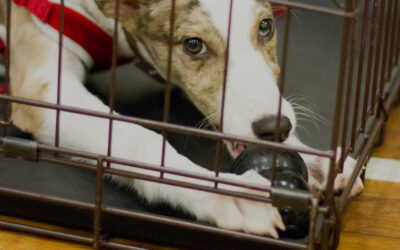
You’ll notice energy levels increase during this period, and while your puppy is not really ready for long walks yet-they need plenty of socialisation, play and leash training forays. However they also need constant supervision and plenty of entertainment in your home and garden and other safe outdoor spaces such as parks or fields. This can prove difficult for owners. A puppy’s ability to cause mayhem and havoc is astounding and while they rarely fixate on anything for more than a few seconds, their razor sharp teeth can chew through things with phenomenal success. Puppy proof your house and garden as best you can and provide plenty of things your dog is allowed to destroy. Use your pen/crate for down time and unsupervised awake time to insure only good chewing habits are built up. Remember that the bigger the jaws, the greater the damage and teething starts at 16 weeks and doesn’t finish until puppy is at least 6 months old.
I reserve toys for games played with me, but leave chew toys around the house to keep him entertained when he’s left alone (Kongs/Yakkers/Antlers/Busy Buddies/raw hide/treat balls). In addition, under supervision, Guinness has endless fun ripping apart cardboard boxes, tearing through kitchen and toilet roll inners and chasing empty plastic bottles around in an attempt to catch or remove food treats. Lightweight plastic plant pot holders are another free method of puppy entertainment. Remember not to waste food by giving if away for free from a bowl. Rather use it to keep your puppy occupied for several hours each day by thinking of imaginative ways to get your puppy to work to find his grub.
While no formal training has taken place with my puppy so far, he has been introduced to several basic concepts when it comes to living with and dealing with human beings and other creatures. I reward any voluntary attention my puppy gives to me. If he glances up, he’s rewarded, if he sits in front of me, he’s rewarded. If he stops and waits for me to catch up, or turns to follow me when I walk away, he’s rewarded. Don’t miss any opportunity to capture and reward behavior that you’ll want in your adult dog. Remember that if your dog thinks you’re worthwhile being around, and more importantly randomly checking in with, he will rarely stray away to get himself into trouble.
Guinness has been introduced to two basic concepts at this early stage. The first is that if he does what I ask, I make it worth his while. I’ve helped him, using a food lure, to learn what sit, down and stand actually mean (and I continue to remind him of this quite regularly). However I also begin to request things of him during our day to day interaction. For example, before I unclip his leash, he must sit, before I throw the ball, he must lie down, if he wants to run free with the other dogs, he must sit, down and stand for this massive jackpot reward. I use everyday life to help train my dog thus avoiding the need for food constantly to get him to respond. I’m trying to get into his little collie head that if he cooperates with me, he gets his way.
The second general training lesson which I recommend puppies learn at this stage of development is the concept of self control. There is a whole less on impulse control in the Online Puppy Course. Dogs with increased levels of impulse control are less likely to bite, less likely to chase and get themselves into trouble and easier dogs overall to live with.
As your puppy’s confidence grows, so too your early recall training may deteriorate. It’s important to get puppy out and about to as many strange places as possible to generalize the idea that responding to the recall sound is always worth their while. Of course the more fun you are to be around the more puppy will look to you for entertainment rather than seek it in the environment around him. For every chance Guinness gets to interact with dogs (an important part of socialisation of course), he spends hours with me, playing, running about, tugging, training etc. One great idea to help train recall is to bring many family members with you and take a hungry puppy to several low distraction environment such as a field or local park during a quiet time. In a safe enclosed area, each person takes turns to call puppy, rewarding with a suitably high value treat such as chicken, liver, hot dog or cheese when he gets to them.
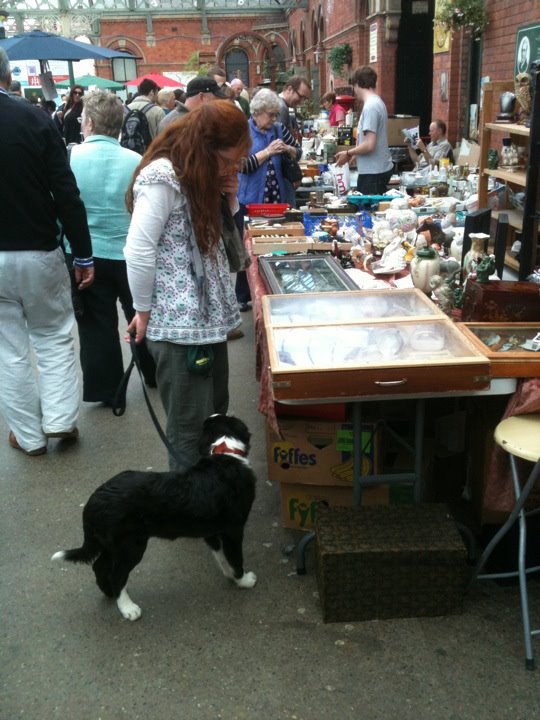
Like recall, loose leash walking can also take several steps back once your puppy’s confidence grows. I’ve found that my little shy boy who crept along the high street during the first few outings now struts his stuff like a pro, regardless of traffic or crowds. Remember the basic concept of walking on a loose leash, make it clear to your puppy that pulling never works. Each time you feel the leash tighten do something to let puppy know pressure on his neck means he can’t move forwards. I tell clients over and over again, leash training cannot be incorporated into ‘taking the dog for a walk’. The two are separate entities and the latter can only be achieved once the former has been successfully mastered. Simply turning away from your puppy and making him follow you if you feel him pulling is great start in loose leash training. Similarly offering him a reason to stay beside you, feeding him while walking by your side, is a great method of getting puppy to stick close and not forge ahead. Another simple exercise advocated by the master of puppy training Dr. Ian Dunbar, is to teach your dog to walk beside you without a leash at all. This means you need to concentrate on your puppy and he on you, before adding the leash at a later stage once puppy knows the correct place to be on walks is by your side.
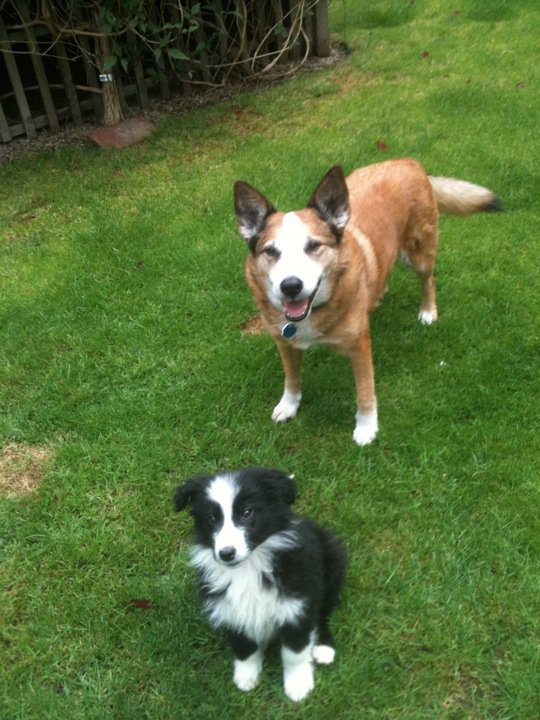
You should reach the end your puppy’s 16th week with a dog who is on the way to becoming a well adjusted adult. He is now, believe it or not, a pre-teen and in the next few months, all your early training, as well as your patience, will be tested once the teen hormones begin to influence his behaviour. We have already seen some humping from Guinness, which so far, we are ignoring to ensure it doesn’t become an attention seeking behaviour. It’s so vital to make a good impressions early on. Not just to establish a positive relationship with each other, but also to lay down ground rules which are clear and understood, both by your family and your dog. This way you can continue to enjoy each other’s company during the often frustrating teen months ahead. I can already see Guinness beginning to question ground rules, to stand back and think about responding, where a few weeks ago he would have done so unquestionably. I remind myself every day what a short time I have to teach how the world works in his little puppy brain but I’m still, thankfully, enjoying every minute of our time together.